
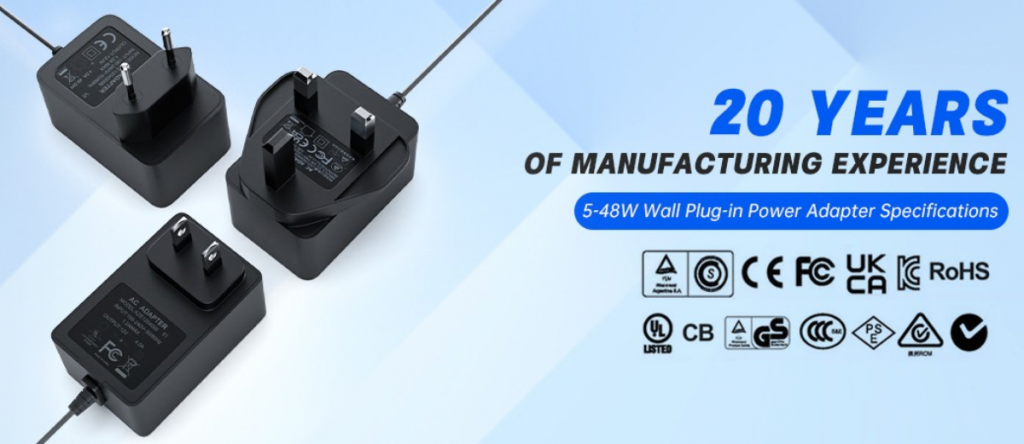
A power adapter serves as the core power supply unit for a wide range of electronic devices, including laptops, desktop monitors, household small appliances, surveillance cameras, LED equipment, and miniature industrial machinery. Most users regard power adapters as permanent accessories and continue to use them as long as the outer shell looks intact. In fact, a power adapter is a precision electronic consumable with a fixed service life. Long-term heat accumulation, continuous power standby, overload operation, and improper storage will accelerate internal component aging. This leads to unstable power output, abnormal charging, and in severe cases, damages device motherboards and batteries, or even causes overheating, short circuits and fire hazards.
Frequent device crashes, battery swelling, and intermittent charging issues are often not caused by the devices themselves, but by aging and degraded power adapters. To help users accurately judge adapter conditions, avoid electrical safety risks, and extend accessory service life, this article comprehensively analyzes power adapter lifespan from six professional dimensions:industry lifespan standards, core aging mechanisms, lifespan loss factors, aging failure symptoms, practical maintenance methods, and replacement guidelines. All content is 100% original and rewritten for unique SEO indexing and in-depth user reading experience.
1. Industry Standard Lifespan of Power Adapters (By Quality Grade)
The service life of a power adapter is not fixed. It mainly depends on component material, manufacturing craftsmanship, safety certification standards, quality control processes, and daily operating conditions. Based on conventional household and office usage scenarios (6–8 hours of daily operation, well-ventilated room temperature, and rated load), the industry divides adapter lifespans into three clear quality grades with practical and commercialized reference data:
High-end original branded adapters deliver the best overall quality. They adopt 105°C high-temperature resistant electrolytic capacitors and complete protection circuits for overvoltage, overcurrent, overheating and short-circuit prevention. All units undergo 72-hour continuous aging tests before delivery to eliminate defective products. Under standard operating environments, these premium adapters feature a stable service life of 5–8 years, maintaining consistent voltage and current output with minimal aging speed, making them the top choice for home and commercial use.
Mid-range certified universal adapters adopt standard industrial-grade components and comply with mainstream safety certifications including 3C and CE. With complete circuit design and no cost-cutting defects, they fit most daily electronic devices. Their average service life ranges from 3–5 years. Balancing cost performance and stability, these adapters are the most widely used option for family and small-office scenarios.
Low-cost unbranded and refurbished adapters adopt low-end 85°C temperature-resistant capacitors, inferior resistors and wires, and simplified protection circuits with no factory aging testing or strict quality control. Their service life is only 1–2 years. After just six months of use, they are prone to voltage fluctuation and abnormal overheating, which not only damage electronic devices but also pose major electrical safety risks. Long-term use is strongly not recommended.
It is important to note that the above lifespans refer to theoretical values under ideal working conditions. Continuous high-temperature operation, 24/7 standby power supply, long-term overload work, and dusty or humid environments canreduce the actual lifespan by 40%–60%, causing premature aging and failure.
2. Core Aging Principles: Why Do Power Adapters Fail Over Time?
Many users mistakenly believe that adapters can work permanently as long as they have no visible physical damage. However, power adapter aging is an irreversible physical loss of internal components that cannot be observed from the outside — this is why adapters often stop working suddenly without obvious external signs.
The electrolytic capacitor is the core component that determines a power adapter’s overall lifespan and acts as the weakest link in durability. During operation, adapters generate continuous heat, which gradually evaporates and dries out the internal electrolyte in capacitors. This aging process is completely irreversible. As electrolyte depletes, capacitor capacity decreases, equivalent series resistance increases, and voltage ripple rises sharply, weakening the adapter’s precise voltage regulation and filtering performance.
When capacitor performance drops below the critical threshold, the adapter’s voltage and current output become unstable and fail to meet the device’s rated power demand. This results in slow charging, intermittent power supply, and frequent device restarts. In contrast, internal components such as transformers, rectifier bridges, main control chips and copper windings feature extremely high durability and rarely fail under rated working conditions. According to industrial maintenance statistics,over 95% of power adapter failures are caused by electrolytic capacitor aging, while only a small number of faults result from physical damage and extreme voltage surges.
3. Five Key Factors That Cause Premature Adapter Aging
Besides natural aging, improper daily usage habits and harsh working environments are the leading causes of early adapter scrapping. Avoiding these unfavorable conditions can effectively extend your adapter’s service life and reduce replacement costs.
3.1 Extreme Heat Accumulation (The Biggest Lifespan Killer)
High temperature is the primary accelerator of capacitor aging. Power adapters inevitably generate heat during operation, which can dissipate normally in ventilated environments. However, many users place adapters on heat-insulating soft surfaces such as beds, sofas and carpets, or cover them with books and sundries. This traps heat inside the shell and causes continuous overheating. Long-term high temperatures rapidly evaporate electrolyte and drastically shorten the adapter’s lifespan. Additionally, placing adapters near device heat vents or direct sunlight will further aggravate thermal loss.
3.2 Long-Term Plug-In Standby & No-Load Power Loss
Most users only disconnect the device end after charging while leaving the adapter plugged into the wall socket for standby. In this state, the adapter still consumes phantom power, keeping internal circuits and capacitors under low-load operation without full rest. Uninterrupted power supply causes continuous component fatigue and aging, greatly shortening the overall service life while generating unnecessary power waste.
3.3 Overload Operation & Unstable Grid Voltage
Improper adapter matching is common among users. Running high-power devices with low-power adapters forces the unit to operate under full or overload load for a long time, producing excessive heat beyond component tolerance and accelerating capacitor degradation and circuit loss. Meanwhile, grid voltage fluctuation and instantaneous power surges impact internal circuits, undermine capacitor stability, and significantly increase failure rates under unstable voltage conditions.
3.4 Harsh Environmental Corrosion
Humid, dusty and extreme temperature environments cause continuous damage to power adapters. Moist air leads to internal circuit oxidation, dampness, poor contact and potential short circuits. Accumulated dust blocks heat dissipation gaps and worsens thermal accumulation, creating dual damage from overheating and corrosion. Drastic seasonal temperature changes cause internal condensation, erode precision components, and accelerate aging failure.
3.6 Physical Damage & Cable Aging
Frequent violent plugging and unplugging, excessive bending, squeezing and long-term messy winding of power cables damage internal copper cores and cause loose interfaces. Poor contact leads to intermittent power supply and local overheating, creating a vicious cycle of repeated circuit impact and accelerated aging. This not only shortens adapter lifespan but also brings potential electric leakage and short-circuit risks.
4. Obvious Symptoms of Aging and Failing Power Adapters
Adapter aging never occurs without warning. There are clear abnormal signs before complete failure. Timely identification and replacement can protect your electronic equipment and eliminate potential electrical safety hazards.
First, abnormal overheating. A normally working adapter only generates mild and warm temperature. If the adapter becomes extremely hot after short-time operation, it indicates internal capacitor aging and abnormal heat dissipation, which is a critical failure signal.
Second, unstable charging and power supply. Obviously slower charging speed, intermittent charging, frequent charging signal flickering, and failure to boot or charge devices all point to excessive voltage ripple and degraded voltage regulation performance caused by component aging.
Third, abnormal noise and peculiar smell. Continuous buzzing or hissing sounds during operation, together with faint burning odors, prove internal component overheating and minor burnout, requiring immediate shutdown and discontinuation of use.
Fourth, shell aging and deformation. Long-term thermal aging leads to shell yellowing, deformation, bulging and cracking. Damaged shells lose protective effects, allowing dust and moisture to invade internal structures and trigger severe faults.
5. Practical Maintenance Tips to Extend Adapter Lifespan
Standardizing daily usage habits can effectively delay component aging, extend the adapter lifespan by 2–3 years, and greatly reduce replacement costs with highly operable methods.
Optimize heat dissipation conditions. Place adapters on flat, hard and well-ventilated desktops, away from soft heat-insulating surfaces, covers and device heat outlets. In hot summer weather, place adapters sideways or use small supports to enhance air convection and improve heat dissipation efficiency.
Cut off power timely to eliminate standby loss. Unplug adapters from wall sockets after charging is completed to avoid long-term no-load operation. It is recommended to perform a 24-hour full power-off reset every month to release residual circuit voltage and restore component activity.
Standardize power matching and electricity usage. Strictly match adapters according to device rated voltage and power to avoid overload operation. For areas with severe grid voltage fluctuation, use stabilizers or UPS power supplies to prevent surge impact on internal circuits.
Standardize storage and regular cleaning. Arrange power cables gently without excessive bending or extrusion. Wipe dust off the adapter shell regularly with dry soft cloth to maintain unobstructed heat dissipation. Avoid long-term use in humid, dusty and extreme temperature environments.
6. When Should You Replace a Power Adapter Immediately?
For device and electrical safety, replace your power adapter with a new certified unit immediately if any of the following situations occurs: deformed or cracked shell, burning smell, abnormal buzzing noise, frequent overheating power cuts, and continuous power supply instability; service life exceeds 8 years for original adapters and 5 years for universal adapters; the unit suffers water ingress, dampness, severe extrusion or broken cables.
Conclusion
A power adapter’s service life is determined by component quality and mainly affected by three core factors: operating temperature, electricity usage habits and working environments. The industry-recognized lifespan standard is 5–8 years for original adapters, 3–5 years for certified universal adapters, and 1–2 years for unbranded adapters. Aging mainly stems from irreversible electrolyte loss in capacitors, while improper daily usage is the leading cause of premature failure. Optimizing heat dissipation, cutting off standby power, standardizing operation and conducting regular maintenance can effectively prolong adapter service life. Timely identification of aging symptoms and reasonable replacement not only protect precision electronic devices but also eliminate electrical safety risks from the source.
FAQs About Power Adapter Lifespan
Q1: Can a power adapter last more than 10 years? Ordinary household power adapters can hardly reach a 10-year lifespan. Only high-quality industrial-grade and premium original adapters can serve nearly 10 years under extreme ideal conditions including constant temperature, zero overload and no standby power. Most civilian adapters show obvious aging degradation after 5 years of use.
Q2: Is it safe to use an aging power adapter? It is not recommended. Aging adapters output unstable voltage, which easily damages device batteries and motherboards. Meanwhile, the risks of overheating and short circuits increase significantly, leading to potential safety hazards that outweigh the cost of replacement.
Q3: Does frequent plugging and unplugging affect adapter lifespan? Gentle daily plugging and unplugging has negligible impact on lifespan. However, violent operation and cable pulling will damage interfaces and internal circuits, accelerating wear and aging.
Leave a Reply